Why Breaking Traditional Thinking Leads to Competitive Advantage
“No great discovery was ever made without a bold guess.” — Isaac NewtonIn today’s fast-changing VUCA (Volatile, Uncertain, Complex, and Ambiguous) world, playing by the same rules as your competitors is a sure way to get stuck in mediocrity. Markets are shifting, supply chains are evolving, and technology is rewriting the game. To win, you must challenge conventional wisdom and boldly build new competitive rules that fix what is broken and work in your favor.
1. Traditional Thinking Creates Bottlenecks
Eli Goldratt, creator of the Theory of Constraints (TOC), argued that businesses must identify and break constraints that limit growth. Too many companies operate within the comfort zones of outdated traditional structures—fully connected MRP, big batch processing, rigid ERP systems, cost-centric, forecast-driven supply chains—while their competition is adopting more agile, flow-based, demand-driven models. “The goal of a company is not to reduce costs, but to make money.” — Eli Goldratt The irony is that these flow-based models are not harder but easier to implement. They require less data, and the time to value is within two lead times.Yet, most organizations focus on efficiency instead of effectiveness, trimming costs while failing to see the real constraint that blocks their growth. Winners redefine the rules by removing bottlenecks and enabling flow-driven, real-time decision-making.
2. A Demand-Driven Model for Success
Newton’s first law states that an object in motion stays in motion unless acted upon by an external force. Similarly, businesses stay in motion following old habits—until a disruption forces change.In 2024, we worked with six major global brands that faced massive disruptions after their highly anticipated, very expensive APS solutions failed. Instead of waiting for disruption, the smartest companies become the disruptors.A Demand-Driven Operating Model (DDOM) challenges the status quo by focusing on:
- Real demand signals
- Fast adaptability
- Inventory buffers that protect against volatility
Instead of optimizing forecasts, leaders optimize response times.
3. The Future Belongs to the Bold
To win, companies must:
- Challenge legacy planning by shifting from push-based to pull-based models
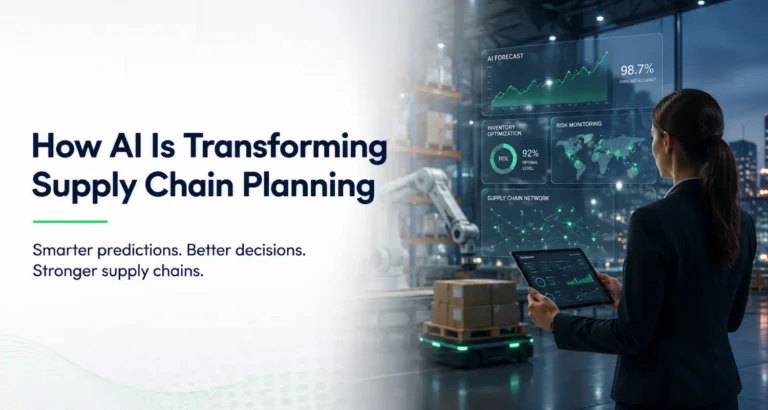
- Leverage AI-driven decision-making to enhance agility
- Create competitive advantages by mastering S&OP with demand-driven insights
At b2wise, we help organizations play by new rules—building a flow-driven, constraint – free supply chain that ensures sustainable growth.
Contact us today to learn how CommWise.ai and Demand-Driven Planning can redefine your competitive edge.